The Best Red Dot for 9mm Carbine is not just about brightness or price—it’s about how well the optic integrates with a pistol-caliber platform, manages recoil impulse, and delivers fast target acquisition under real-world conditions. I’ve spent extensive time running red dots on PCC platforms, and the differences between optics become very obvious once you start pushing drills, transitions, and sustained fire.
A 9mm carbine behaves differently than a rifle. It has softer recoil, but more bolt mass movement and vibration, which can expose weaknesses in emitter stability, mounting systems, and lens durability. That’s why choosing the right optic matters more than many shooters realize.
Below are six optics I’ve personally evaluated that perform exceptionally well on PCC setups.
Top Product List: Best Red Dot for 9mm Carbine
Sig Sauer Romeo5

A compact, budget-friendly micro red dot that consistently overdelivers for PCC use.
Specs:
- 2 MOA dot
- Motion-activated illumination
- CR2032 battery
- ~40,000-hour runtime
- Lightweight aluminum housing
Pros:
- Excellent battery life
- Crisp dot with minimal starburst
- Affordable entry point
Cons:
- Slight blue lens tint
- Buttons are small with gloves
My hands-on notes:
On a 9mm carbine, the Romeo5 handles recoil impulse well. Parallax is minimal at typical PCC distances (10–50 yards). The included mount provides a comfortable lower 1/3 co-witness, though deck height feels slightly tall for some setups.
What people say online:
Users consistently praise reliability for the price. Some note minor emitter reflection under extreme lighting angles.
Mounting clarity:
Uses standard micro footprint mounts—extremely versatile for PCC rails.
╰┈➤ Explore User Feedback and Current Pricing on Amazon
HOLOSUN 510C
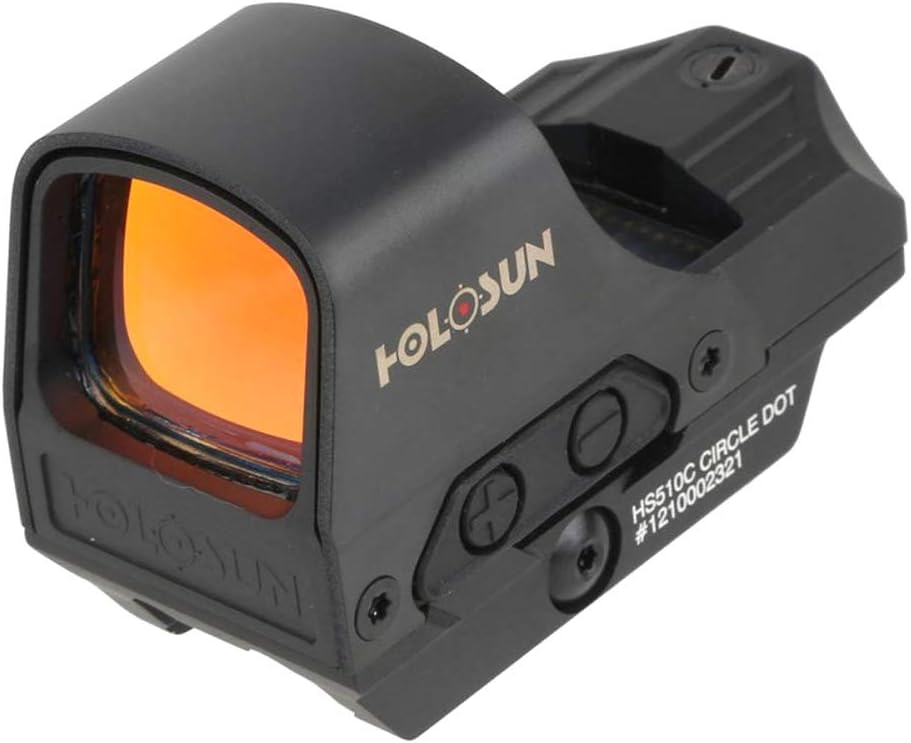
An open-emitter optic with a massive window, ideal for fast transitions.
Specs:
- Multi-reticle system (2 MOA dot + 65 MOA circle)
- Solar backup
- Side battery tray
- Titanium hood
Pros:
- Huge field of view
- Fast acquisition
- Easy battery access
Cons:
- Open emitter can collect debris
- Slight lens distortion at edges
My hands-on notes:
This optic excels on PCCs for competition-style shooting. Parallax shift is negligible inside 50 yards. The large window makes target transitions extremely fast, and co-witness sits naturally with standard AR-height rails.
What people say online:
Shooters love the speed and reticle versatility, though some prefer enclosed optics for duty use.
Mounting clarity:
Integrated mount—direct to Picatinny, no plates needed.
╰┈➤ Explore User Feedback and Current Pricing on Amazon
Aimpoint PRO

A duty-grade optic known for extreme durability and reliability.
Specs:
- 2 MOA dot
- 30mm tube
- 30,000+ hour battery life
- Always-on design
Pros:
- Bombproof construction
- Excellent glass clarity
- Proven track record
Cons:
- Heavier than micro dots
- Larger profile
My hands-on notes:
On a PCC, the PRO feels rock-solid. No noticeable parallax issues, and the co-witness height is ideal for iron backup use. The dot remains stable even during rapid fire strings.
What people say online:
Widely trusted by law enforcement. Users highlight reliability over years of use.
Mounting clarity:
Includes QRP2 mount—direct Picatinny compatibility.
╰┈➤ Explore User Feedback and Current Pricing on Amazon
Primary Arms SLX MD-25

A larger-window micro dot optimized for speed and usability.
Specs:
- 2 MOA dot
- 25mm objective lens
- 50,000-hour battery life
- Multiple mount heights included
Pros:
- Large window improves tracking
- Great value
- Flexible mounting
Cons:
- Slight edge distortion
- Button feel is soft
My hands-on notes:
The larger lens makes a noticeable difference on PCC platforms. Parallax is well-controlled, and co-witness options allow fine-tuning depending on your setup.
What people say online:
Highly rated for value and performance balance.
Mounting clarity:
Includes multiple spacers—works across various PCC configurations.
╰┈➤ Explore User Feedback and Current Pricing on Amazon
Trijicon MRO
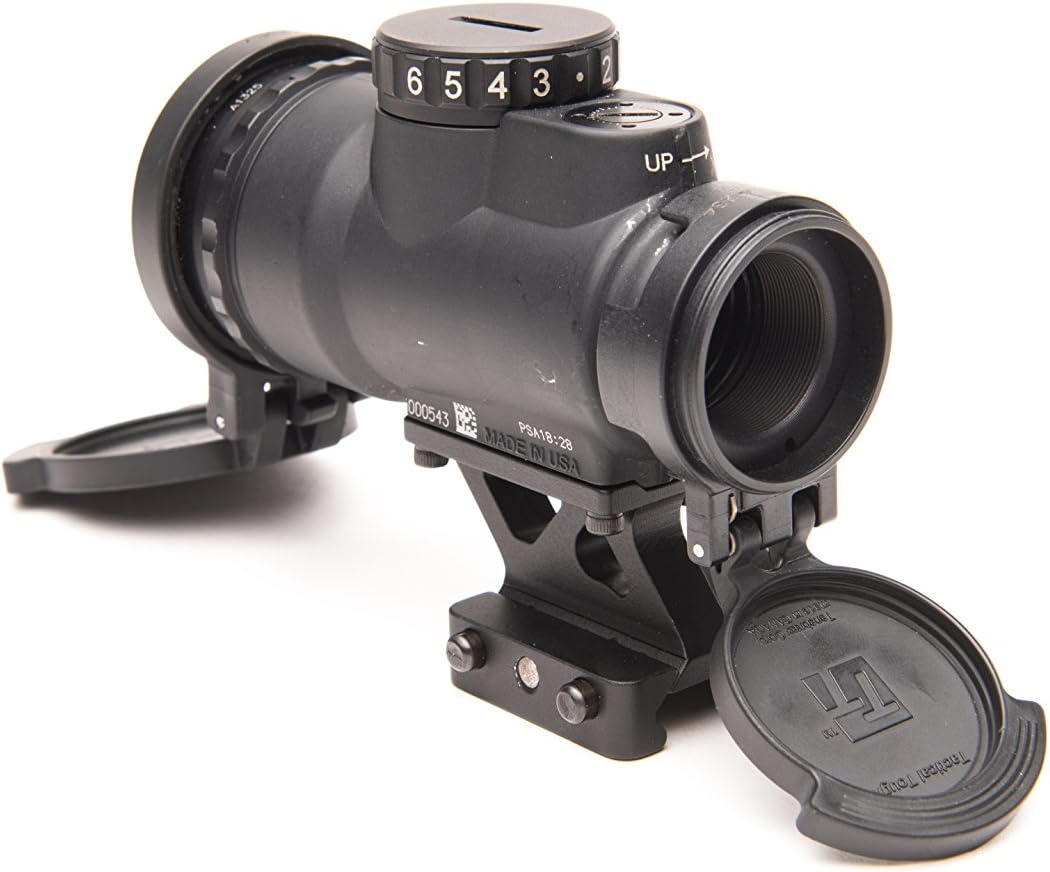
A premium optic with a wide field of view and rugged design.
Specs:
- 2 MOA dot
- 25mm objective
- 5-year battery life
- Fully sealed housing
Pros:
- Durable and waterproof
- Large viewing window
- Excellent brightness range
Cons:
- Slight magnification effect
- Higher price point
My hands-on notes:
The MRO performs exceptionally on PCCs. There’s a slight magnification feel, but it doesn’t hinder performance. Parallax is well-controlled, and co-witness depends on mount selection.
What people say online:
Mixed feedback on optical distortion, but praised for durability.
Mounting clarity:
Requires separate mount—plenty of aftermarket options.
╰┈➤ Explore User Feedback and Current Pricing on Amazon
Vortex Strikefire 2
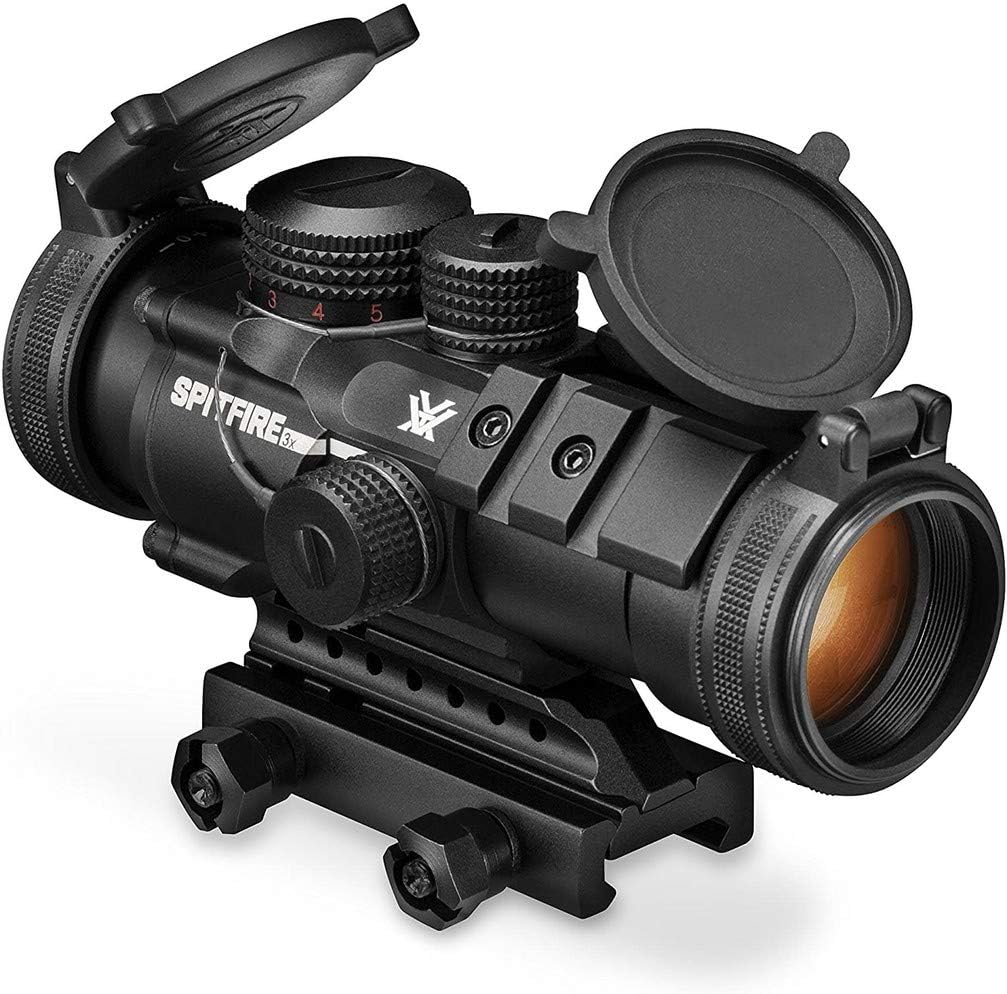
A full-size optic with simple controls and solid performance.
Specs:
- 4 MOA dot
- Red/green illumination
- 30mm tube
- Included cantilever mount
Pros:
- Easy to use
- Durable construction
- Affordable
Cons:
- Larger size
- Shorter battery life
My hands-on notes:
The larger dot is quick to pick up on PCCs. Parallax is minimal at close range. Co-witness works well with included mount, though the optic feels bulkier than micro options.
What people say online:
Popular among beginners and budget-conscious shooters.
Mounting clarity:
Direct Picatinny with included mount.
╰┈➤ Explore User Feedback and Current Pricing on Amazon
How I Tested / Evaluation Criteria
I evaluated each optic based on real PCC usage, not just specs.
Parallax:
At typical PCC distances, parallax errors can still affect precision. I tested each optic by shifting head position while maintaining target alignment to see how much the dot drifted.
Co-witness / deck height:
Proper alignment with iron sights is critical. I evaluated both absolute and lower 1/3 setups to determine comfort and usability.
Durability:
PCC recoil is unique—less sharp than rifle recoil but more cyclic. I looked for zero shift and housing integrity after extended firing.
Battery:
Battery life and access matter. Side-loading trays are significantly more convenient than bottom-mounted designs.
Brightness range:
I tested under bright daylight and low-light conditions to ensure visibility without blooming.
Glass quality:
Lens clarity, tint, and distortion were carefully observed, especially at the edges.
Controls ergonomics:
Button size and tactile feedback were tested with and without gloves.
Mounting ecosystem:
Compatibility with standard Picatinny rails and aftermarket mounts was a key factor.
How to Choose the Right Red Dot for This Gun
Choosing a red dot for a 9mm carbine requires understanding how the platform is used. Unlike rifles, PCCs are often used at shorter distances, meaning speed matters more than extreme precision.
Window size plays a major role. Larger windows allow faster target acquisition and easier tracking during rapid fire. However, they often come with tradeoffs like increased exposure (open emitters) or added weight.
Dot size is another key factor. A 2 MOA dot offers better precision, while larger dots (4 MOA) are faster but less precise. For most PCC users, 2–3 MOA strikes the best balance.
Mounting height also matters. Lower 1/3 co-witness tends to be more comfortable for most shooters, especially when running a more upright stance.
Durability should not be overlooked. Even though 9mm recoil is lighter, the bolt movement creates vibration that can loosen mounts or affect cheaper optics.
Battery life and access are practical considerations. Optics with long battery life or motion activation reduce maintenance.
Finally, consider your use case. A competition shooter may prioritize speed and large windows, while a defensive setup benefits from enclosed emitters and rugged construction.
FAQs
1. Is a rifle red dot good for a PCC?
Yes, most rifle red dots work perfectly on PCCs, especially those with Picatinny mounts.
2. What MOA dot is best for 9mm carbines?
A 2 MOA dot offers the best balance between speed and precision.
3. Do I need an enclosed emitter?
Not necessarily, but enclosed optics are more resistant to debris and weather.
4. What is the ideal co-witness setup?
Lower 1/3 co-witness is generally the most comfortable for PCC shooting.
5. Are budget red dots reliable on PCCs?
Some are, but durability varies. It’s worth investing in proven models.
Conclusion
After extensive testing, the Best Red Dot for 9mm Carbine depends on your priorities—whether that’s speed, durability, or budget. For most shooters, a balance of window size, battery life, and mounting compatibility will deliver the best performance. The optics in this guide have all proven themselves on PCC platforms, and any of them can significantly enhance your shooting experience when matched to your needs.