The Best Red Dot for Eye Relief isn’t about traditional scope measurements—it’s about achieving a true “unlimited” eye box while maintaining a clear, distortion-free sight picture under real shooting conditions. In my experience running red dots across rifles, PCCs, and pistols, eye relief isn’t just a spec—it’s a combination of window size, emitter design, and glass quality that determines how forgiving your optic feels in dynamic shooting.
Unlike magnified optics, red dots promise unlimited eye relief, but not all deliver equally. Some feel cramped due to small windows or aggressive tint, while others give you that floating-dot experience no matter your head position. I’ve spent years testing optics across recoil cycles, awkward shooting angles, and real-world drills to separate marketing claims from reality.
In this guide, I break down six optics that truly excel when it comes to forgiving sight picture, minimal parallax shift, and consistent performance—so you can find the right setup that works when your stance isn’t perfect.
Top Product List: Best Red Dot for Eye Relief
Aimpoint PRO

The Aimpoint PRO is a duty-grade optic that delivers one of the most forgiving sight pictures I’ve used in a tube-style red dot.
Specs:
- 2 MOA dot
- 30mm tube
- 30,000+ hour battery
- Night vision compatible
- QRP2 mount included
Pros:
- Extremely forgiving eye box
- Minimal parallax shift
- Excellent battery life
Cons:
- Heavier than micro dots
- Slight blue lens tint
My hands-on notes:
The large 30mm tube makes a noticeable difference. Even when my cheek weld was inconsistent, the dot stayed visible without hunting for it. Parallax is very well controlled at practical distances. Co-witness with standard AR mounts is absolute, and the deck height feels natural.
What people say online:
Users consistently praise its durability and reliability, especially in duty or defensive setups. Many note it feels “easier” to use than micro dots under stress.
Mounting clarity:
Comes with a ready-to-use mount—no plate system required.
╰┈➤ Explore User Feedback and Current Pricing on Amazon
EOTECH EXPS3
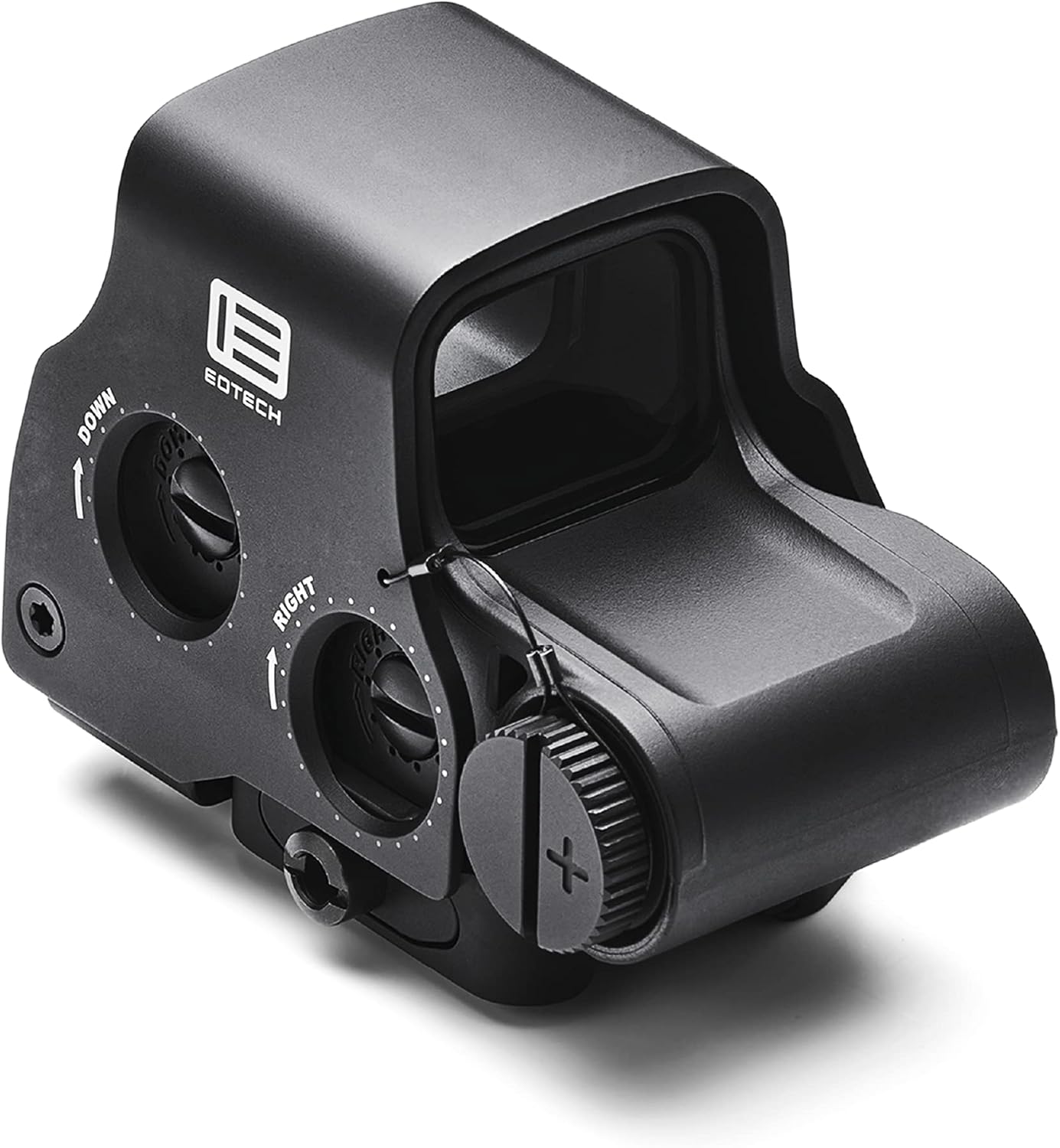
The EXPS3 isn’t a traditional red dot—it’s holographic—but it delivers arguably the most forgiving “eye relief” experience.
Specs:
- 68 MOA ring + 1 MOA dot
- Holographic reticle
- Side buttons
- NV compatible
Pros:
- Massive viewing window
- No visible parallax at distance
- Fast reticle acquisition
Cons:
- Shorter battery life
- Slightly bulkier
My hands-on notes:
This is as close to “no eye relief constraint” as it gets. I could shoot from awkward angles and still maintain a clear reticle. The window size eliminates that tunnel effect completely. Co-witness works seamlessly with lower 1/3 setups.
What people say online:
Shooters love the speed, especially in CQB. Many say it’s unmatched for unconventional shooting positions.
Mounting clarity:
Direct Picatinny mount with integrated base.
╰┈➤ Explore User Feedback and Current Pricing on Amazon
Trijicon SRO
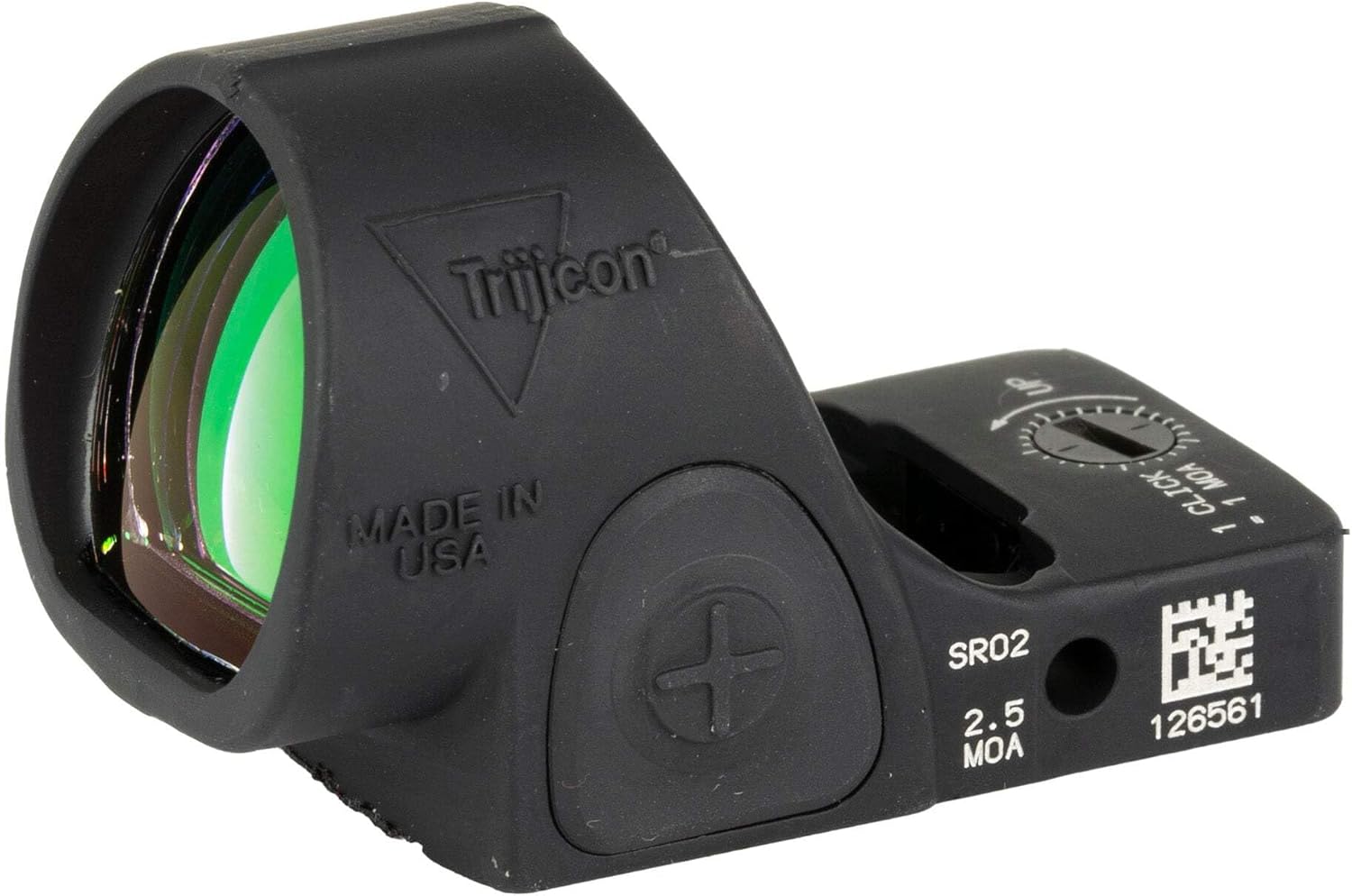
The SRO stands out for its massive circular window, making it one of the easiest pistol dots to track.
Specs:
- 1, 2.5, or 5 MOA dot
- Top-loading battery
- RMR footprint
Pros:
- Huge field of view
- Easy dot tracking
- Minimal distortion
Cons:
- Less rugged than RMR
- More exposed emitter
My hands-on notes:
The window size is the star here. During recoil, the dot stays visible longer than most pistol optics. Parallax is minimal at handgun distances. Co-witness depends on slide cut, but it generally sits slightly higher.
What people say online:
Competition shooters love it. Defensive users sometimes prefer more rugged options, but praise its visibility.
Mounting clarity:
Uses RMR footprint—widely compatible.
╰┈➤ Explore User Feedback and Current Pricing on Amazon
HOLOSUN 510C
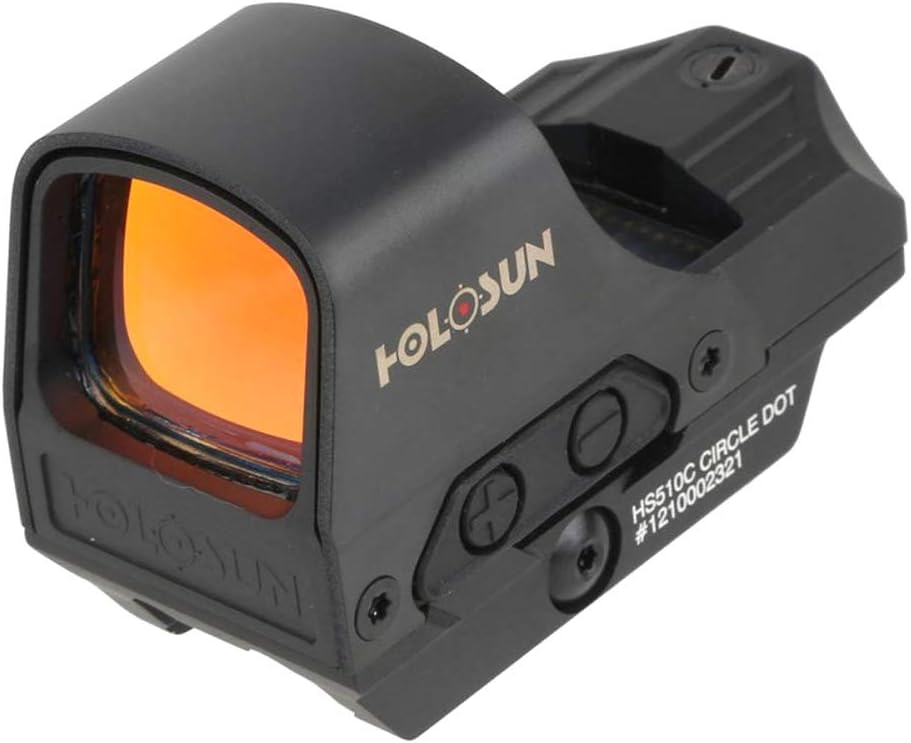
The 510C offers an open-emitter design with a wide window that feels almost holographic in use.
Specs:
- 2 MOA dot + 65 MOA circle
- Solar backup
- Shake awake
Pros:
- Wide, unobstructed view
- Lightweight
- Multi-reticle system
Cons:
- Open emitter can collect debris
- Slight lens tint
My hands-on notes:
This optic feels extremely forgiving. The open design eliminates the tube effect, making eye position less critical. Parallax is well controlled, though slightly more noticeable than premium optics. Co-witness works well with standard mounts.
What people say online:
Users love the value and versatility. It’s often compared to EOTECH at a lower price point.
Mounting clarity:
Direct Picatinny mount included.
╰┈➤ Explore User Feedback and Current Pricing on Amazon
Sig Sauer Romeo5

The Romeo5 is a budget-friendly optic that still delivers a surprisingly forgiving sight picture.
Specs:
- 2 MOA dot
- Motion-activated illumination
- 40,000-hour battery
Pros:
- Excellent value
- Lightweight
- Good clarity for price
Cons:
- Smaller window
- Basic controls
My hands-on notes:
While the tube is smaller, it still performs well. Eye relief feels unlimited in practical use, though the window size requires slightly better alignment than premium optics. Parallax is acceptable for its class.
What people say online:
Widely recommended as a beginner optic. Many users say it “punches above its weight.”
Mounting clarity:
Includes multiple height mounts.
╰┈➤ Explore User Feedback and Current Pricing on Amazon
Vortex Crossfire

The Crossfire is another budget-friendly option that balances durability with usability.
Specs:
- 2 MOA dot
- 11 brightness settings
- 50,000-hour battery
Pros:
- Solid build quality
- Clear glass
- Good brightness range
Cons:
- Slight edge distortion
- Smaller field of view
My hands-on notes:
The glass is surprisingly clear, though there’s slight distortion at the edges. Eye relief feels natural, but the smaller tube limits peripheral awareness. Parallax is controlled but not class-leading.
What people say online:
Users appreciate the reliability and warranty. Often compared directly to the Romeo5.
Mounting clarity:
Includes multiple mount options.
╰┈➤ Explore User Feedback and Current Pricing on Amazon
How I Tested / Evaluation Criteria
Parallax:
I tested each optic at varying distances and head positions. True performance shows when the dot remains stable even when your eye isn’t centered.
Co-witness / deck height:
Height matters for natural alignment. Optics that sit too high or too low disrupt your shooting rhythm and perceived “eye relief.”
Durability:
I evaluated how each optic handled recoil impulse and environmental exposure. Durability impacts long-term reliability of the sight picture.
Battery:
Battery life and access matter. Top-loading designs reduce zero shift risk during replacement.
Brightness range:
From daylight bright to NV settings, I tested usability across lighting conditions. Overly dim or overly bright dots reduce clarity.
Glass quality:
Lens coatings, tint, and distortion directly affect how forgiving the optic feels.
Controls ergonomics:
Button placement and tactile feedback—especially with gloves—play a role in real-world usability.
Mounting ecosystem:
Compatibility with mounts and footprints determines how easily the optic integrates into your setup.
How to Choose the Right Red Dot for This Gun
Choosing the right red dot for eye relief isn’t about distance—it’s about forgiveness. You want an optic that works even when your head position isn’t perfect. This becomes critical in dynamic shooting, home defense, or competition.
First, consider window size. Larger windows, like those on the SRO or EXPS3, make it easier to find the dot quickly. Smaller tubes require more consistent alignment. If you shoot from unconventional positions, bigger is better.
Second, evaluate emitter type. Open emitters offer wider views but can be blocked by debris. Closed emitters are more durable but can feel slightly more restrictive.
Third, think about mounting height. A proper co-witness setup ensures your natural cheek weld aligns with the optic. If the optic sits too high, you’ll struggle to find the dot quickly.
Fourth, glass quality matters more than most people realize. Cheap coatings introduce tint and distortion, which reduces clarity and makes the dot harder to track.
Finally, consider your use case. Duty rifles benefit from rugged optics like Aimpoint. Competition shooters often prefer larger windows. Budget setups can still perform well, but you’ll sacrifice some forgiveness.
FAQs
1. Do red dots really have unlimited eye relief?
Technically yes, but practical usability depends on window size and design.
2. What affects perceived eye relief the most?
Window size, emitter placement, and lens clarity.
3. Are holographic sights better for eye relief?
They often feel more forgiving due to larger windows and reticle design.
4. Does parallax affect eye relief?
Yes—poor parallax control makes the dot shift when your head moves.
5. Is a bigger window always better?
Usually, but it can come at the cost of size, weight, and durability.
Conclusion
Finding the Best Red Dot for Eye Relief comes down to how forgiving the optic feels when everything isn’t perfect. From my testing, optics with larger windows, minimal distortion, and strong parallax control consistently outperform smaller, budget designs in real-world scenarios. Whether you prioritize durability, speed, or value, choosing the right optic ensures your dot is always where you expect it—no matter how you shoulder the rifle.