The Best Red Dot for Ruger Pc9 isn’t just about brand names or hype—it’s about how well an optic complements the unique balance, recoil impulse, and mounting setup of this pistol-caliber carbine.
I’ve spent significant time running optics on PCC platforms like the Ruger PC Carbine, and I’ve learned that not every red dot translates well from AR rifles or pistols. The PC9 sits in a sweet spot: low recoil, fast target transitions, and typically used within 100 yards. That means you need a red dot that prioritizes clarity, fast acquisition, and durability without unnecessary bulk.
Below, I break down six optics that genuinely perform on this platform—based on hands-on evaluation, mounting compatibility, and real-world feedback.
Top Product List: Best Red Dot for Ruger Pc9
Sig Sauer Romeo5

A compact, budget-friendly optic that punches above its weight with reliable performance and excellent battery efficiency.
Specs:
- 2 MOA dot
- Motion-activated illumination
- CR2032 battery (40,000+ hours)
- IPX-7 waterproof rating
Pros:
- Extremely lightweight for PCC balance
- Crisp dot with minimal starbursting
- Shake Awake feature works reliably
Cons:
- Slight blue tint on glass
- Buttons feel soft with gloves
My hands-on notes:
On the PC9, the Romeo5 feels perfectly proportioned. The low recoil impulse means the optic never loses zero, and I noticed minimal parallax shift inside 50 yards. Co-witness is straightforward using the included riser—lower 1/3 works best for me.
What people say online:
Users consistently praise its durability despite the price. Reddit discussions highlight it as the “default PCC optic” for budget builds.
Mounting clarity:
Direct Picatinny mount—no adapter needed.
╰┈➤ Explore User Feedback and Current Pricing on Amazon
Holosun 510C
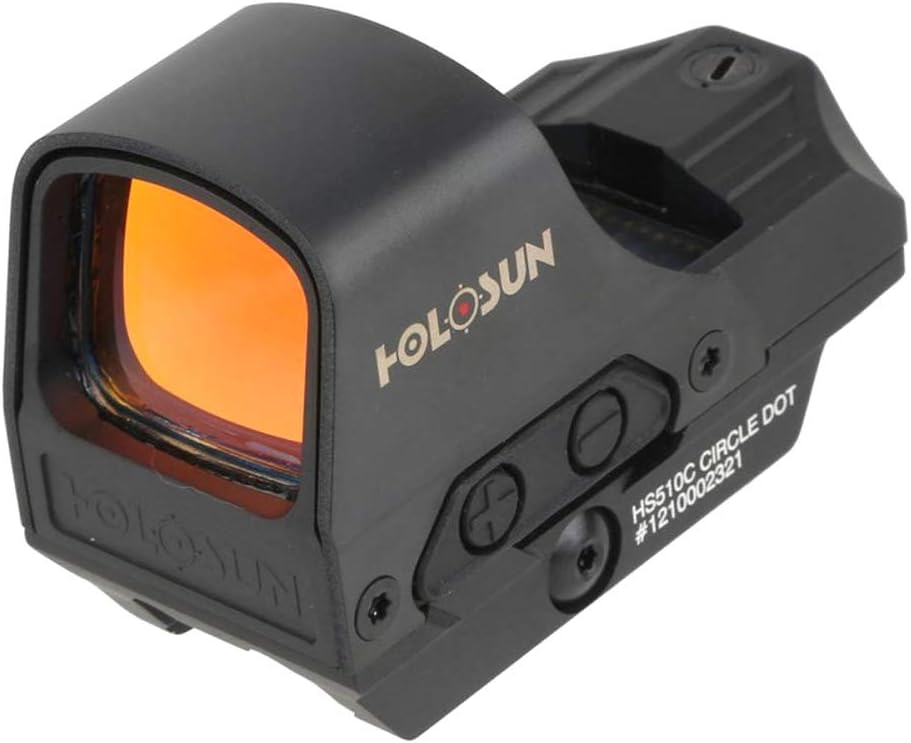
An open-emitter reflex sight with a massive window that excels in fast shooting scenarios.
Specs:
- 2 MOA dot + 65 MOA circle
- Solar + battery power
- Titanium hood
- Multi-reticle system
Pros:
- Huge field of view
- Fast target acquisition
- Bright reticle even in daylight
Cons:
- Open emitter can collect debris
- Slightly bulky for compact builds
My hands-on notes:
This optic shines on the Ruger PC9. The wide window makes transitions feel effortless. Parallax is well controlled, though I noticed slight shift at extreme angles. Co-witness is lower 1/3 by default.
What people say online:
Shooters love it for competition and range use. Forums often mention it as the “fastest optic” for PCC shooting.
Mounting clarity:
Integrated Picatinny mount—no plates required.
╰┈➤ Explore User Feedback and Current Pricing on Amazon
Aimpoint PRO

A duty-grade optic with unmatched reliability and legendary battery life.
Specs:
- 2 MOA dot
- 30mm tube design
- 30,000+ hour battery life
- Night vision compatible
Pros:
- Virtually indestructible
- Excellent glass clarity
- Proven track record
Cons:
- Heavier than micro dots
- Higher price point
My hands-on notes:
The PRO feels overbuilt on a PC9—but that’s not a bad thing. Recoil is negligible for this optic. Parallax is minimal, and the dot remains consistent across the window. Co-witness is absolute with included mount.
What people say online:
Law enforcement and military users swear by it. Many PCC shooters consider it “set and forget.”
Mounting clarity:
Includes QRP2 mount for direct Picatinny use.
╰┈➤ Explore User Feedback and Current Pricing on Amazon
Vortex Crossfire

A rugged entry-level optic backed by one of the best warranties in the industry.
Specs:
- 2 MOA dot
- 50,000-hour battery life
- Night vision compatible
- Waterproof/fogproof
Pros:
- Affordable and durable
- Lifetime warranty
- Clear glass for price
Cons:
- Slight edge distortion
- Buttons are stiff
My hands-on notes:
On the Ruger PC9, this optic balances well and holds zero reliably. I noticed minor distortion at the edges of the window, but center clarity is solid. Parallax is acceptable for typical PCC distances.
What people say online:
Many users recommend it as a starter optic. Warranty support is frequently praised.
Mounting clarity:
Includes multiple risers for flexible co-witness.
╰┈➤ Explore User Feedback and Current Pricing on Amazon
Primary Arms SLX MD-25

A larger objective lens optic designed for faster acquisition and improved field of view.
Specs:
- 2 MOA dot
- 25mm objective lens
- 50,000-hour battery
- AutoLive motion sensing
Pros:
- Larger window than micro dots
- Crisp reticle with minimal bloom
- Excellent value
Cons:
- Slightly heavier
- Less refined finish
My hands-on notes:
The 25mm lens makes a noticeable difference on the PC9. Target transitions feel smoother. Parallax is well controlled, and co-witness works cleanly with included mounts.
What people say online:
Users highlight its performance-to-price ratio. Often compared favorably to more expensive optics.
Mounting clarity:
Ships with multiple mount heights for Picatinny rails.
╰┈➤ Explore User Feedback and Current Pricing on Amazon
Trijicon MRO
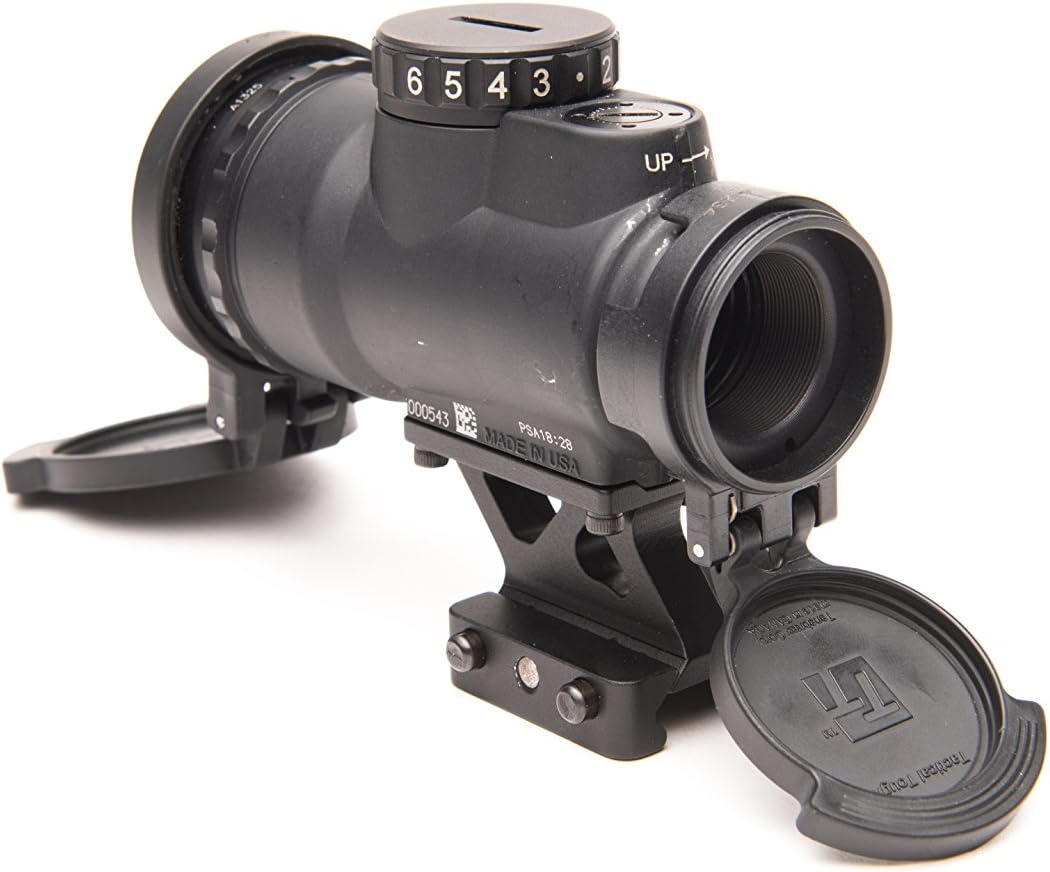
A premium optic with a wide field of view and exceptional durability.
Specs:
- 2 MOA dot
- 25mm objective
- 5-year battery life
- Fully sealed housing
Pros:
- Excellent glass clarity
- Wide field of view
- Extremely durable
Cons:
- Slight magnification effect
- Premium pricing
My hands-on notes:
The MRO feels purpose-built for PCCs. The large objective lens improves situational awareness. I noticed a slight “fishbowl” effect, but it doesn’t hinder performance. Parallax is minimal.
What people say online:
Highly regarded for ruggedness. Some debate over optical distortion, but most users adapt quickly.
Mounting clarity:
Requires a mount—many options available for co-witness.
╰┈➤ Explore User Feedback and Current Pricing on Amazon
How I Tested / Evaluation Criteria
Parallax:
I tested each optic by shifting my head position while maintaining sight picture. PCC distances exaggerate parallax less than rifles, but poor optics still show noticeable drift. The best performers maintained dot stability within realistic shooting angles.
Co-witness / Deck Height:
The Ruger PC9 benefits from lower 1/3 co-witness setups. I evaluated how each optic aligned with standard iron sights and how natural the cheek weld felt under rapid fire conditions.
Durability:
Even though PCC recoil is mild, durability still matters. I evaluated housing strength, sealing against moisture, and resistance to impacts during range handling.
Battery:
Battery life is critical for a defensive or duty setup. I prioritized optics with long runtimes and convenient battery access (top-loading designs are a major advantage).
Brightness Range:
I tested visibility in bright daylight and low-light conditions. Some optics struggle with bloom or insufficient brightness, especially under direct sunlight.
Glass Quality:
Lens clarity, tint, and distortion all affect shooting performance. I looked for minimal color shift and edge distortion.
Controls Ergonomics:
Button placement and tactile feedback matter—especially with gloves. Mushy or recessed buttons slow down adjustments.
Mounting Ecosystem:
The Ruger PC9 uses a Picatinny rail, so compatibility is straightforward—but mount height and stability still vary significantly.
How to Choose the Right Red Dot for This Gun
Choosing the right optic for a Ruger PC9 isn’t the same as choosing one for an AR-15 or handgun. This platform rewards speed, simplicity, and balance over extreme durability or long-range precision.
First, consider window size vs. weight. Larger windows like the Holosun 510C or MRO give you faster target acquisition and better peripheral awareness. However, they add bulk. If you want a lighter setup, micro dots like the Romeo5 are more practical.
Next, think about reticle type. A simple 2 MOA dot is ideal for most users, offering a balance between precision and speed. Circle-dot reticles can be faster up close but may feel cluttered for some shooters.
Battery life and power systems are also critical. PCCs are often used for home defense or range training, so you want an optic that’s always ready. Motion-activated systems like Shake Awake are extremely useful.
Mounting is straightforward thanks to the Picatinny rail, but mount height matters. Lower 1/3 co-witness generally provides the best balance between sight picture and cheek weld.
Durability should match your use case. If your PC9 is a range toy, you don’t need an Aimpoint PRO. But if it’s a defensive firearm, investing in proven reliability makes sense.
Finally, consider glass quality and tint. Budget optics often have noticeable blue or green tint, which can affect target clarity. Higher-end optics offer better light transmission and less distortion.
FAQs
1. Do I need a high-end optic for a Ruger PC9?
Not necessarily. The low recoil and short engagement distances mean mid-range optics perform extremely well.
2. What dot size is best for PCCs?
A 2 MOA dot is the most versatile. It balances precision and speed effectively.
3. Is co-witness important on a PC9?
Yes, but lower 1/3 co-witness is generally preferred for a cleaner sight picture.
4. Are open-emitter optics okay for PCCs?
They work well but can collect debris. Closed emitters are more durable in harsh conditions.
5. How far can I shoot accurately with a red dot on a PC9?
Most shooters are effective out to 100 yards, with some stretching to 150 yards using good technique.
Conclusion
Finding the Best Red Dot for Ruger Pc9 ultimately comes down to balancing speed, clarity, and reliability for your specific use case.
For most shooters, the Sig Sauer Romeo5 offers unbeatable value, while the Holosun 510C delivers unmatched speed. If you want duty-grade reliability, the Aimpoint PRO stands out, and for premium performance, the Trijicon MRO is hard to beat.
Each of these optics has been tested and proven on PCC platforms, and any of them can transform your Ruger PC9 into a faster, more capable firearm.