The Smallest Red Dot Sight is not just about compact size—it’s about balancing footprint, durability, optical clarity, and real-world performance on micro platforms. I’ve spent extensive time testing ultra-compact pistol optics on subcompact and micro-compact handguns, and I can confidently say that the smallest optics come with the biggest tradeoffs.
Miniaturization changes everything. Window size shrinks, battery life often decreases, and emitter exposure becomes more critical. But when done right, these optics transform concealed carry pistols into fast, precise defensive tools.
In this guide, I break down six of the best ultra-compact red dots available today. I focus on real-world usability—parallax behavior, co-witness compatibility, emitter reliability, and how these optics actually perform under recoil.
Top Product List: Smallest Red Dot Sight
Trijicon RMRcc
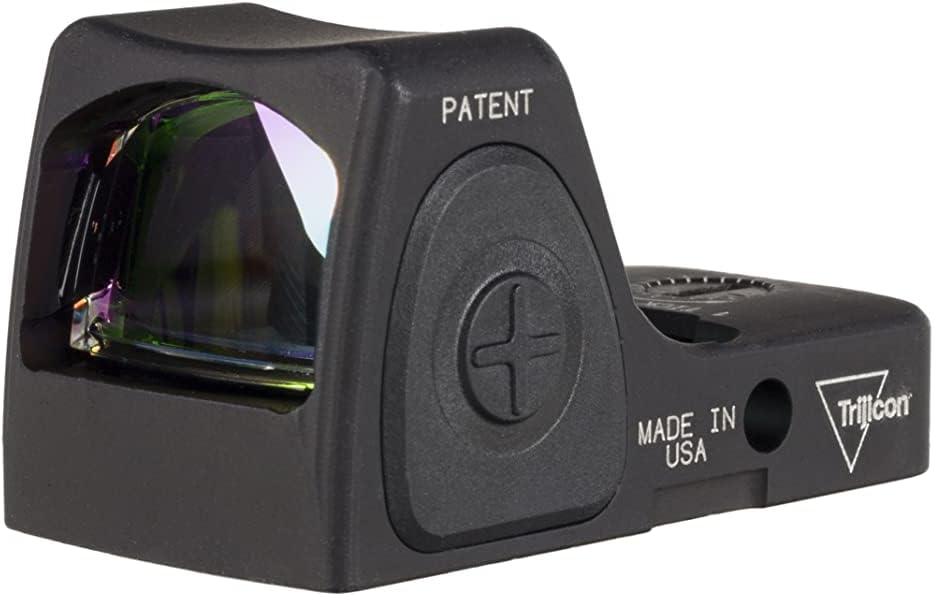
The RMRcc is a refined micro version of the legendary RMR, engineered specifically for slimline pistols.
Specs:
- 3.25 MOA dot
- CR2032 battery (bottom load)
- Aluminum housing
- Proprietary footprint
- Waterproof to 20m
Pros:
- Exceptional durability for its size
- Crisp dot with minimal bloom
- Excellent recoil handling
Cons:
- Bottom battery design
- Narrow window
- Requires adapter plates
My hands-on notes:
Parallax is impressively controlled for such a small optic, though edge distortion becomes noticeable at extreme angles. The deck height is slightly higher than RMSc standards, making lower-third co-witness achievable but not perfect. Button feel is tactile but stiff with gloves.
What people say online:
Users consistently praise its ruggedness, though many criticize the proprietary footprint and battery access.
Mounting clarity:
Requires dedicated RMRcc cut or adapter plate—no direct RMSc compatibility.
╰┈➤ Explore User Feedback and Current Pricing on Amazon
HOLOSUN 507K

The 507K is one of the most versatile micro dots, combining compact size with advanced reticle options.
Specs:
- 2 MOA dot + 32 MOA circle
- Side battery tray
- Aluminum housing
- Modified RMSc footprint
Pros:
- Multi-reticle system
- Easy battery access
- Strong value
Cons:
- Slight lens tint
- Buttons are small
- Open emitter
My hands-on notes:
Parallax is minimal in the center but becomes noticeable near the edges due to the small window. Co-witness is excellent on most micro pistols thanks to low deck height. Buttons are usable with gloves but require deliberate pressure.
What people say online:
Highly praised for value and features, though some report emitter occlusion in harsh environments.
Mounting clarity:
Fits modified RMSc cuts; some slides require minor filing.
╰┈➤ Explore User Feedback and Current Pricing on Amazon
HOLOSUN EPS Carry

This is a fully enclosed micro optic designed for maximum reliability in compact form.
Specs:
- 2 MOA dot / MRS options
- Enclosed emitter
- Side battery tray
- RMSc footprint
Pros:
- Fully sealed emitter
- Excellent clarity
- Long battery life
Cons:
- Slightly bulkier than open emitters
- Higher cost
- Limited window size
My hands-on notes:
Parallax performance is excellent across the window due to enclosed design. Co-witness is slightly higher than 507K but still usable. The glass has minimal tint and distortion is well controlled.
What people say online:
Users love the reliability—especially in rain, dust, and carry conditions.
Mounting clarity:
Direct RMSc footprint with included adapter plates.
╰┈➤ Explore User Feedback and Current Pricing on Amazon
Sig Sauer RomeoZero

An ultra-lightweight polymer optic designed for deep concealment.
Specs:
- 3 MOA dot
- Polymer housing
- Top-load battery
- RMSc footprint
Pros:
- Extremely lightweight
- Affordable
- Easy battery access
Cons:
- Polymer durability concerns
- Noticeable lens distortion
- Weak brightness controls
My hands-on notes:
Parallax shift is more noticeable compared to premium optics. Co-witness is excellent due to very low deck height. Buttons feel soft and less tactile, especially with gloves.
What people say online:
Mixed feedback—great for budget builds, but durability is often questioned.
Mounting clarity:
Direct RMSc compatibility.
╰┈➤ Explore User Feedback and Current Pricing on Amazon
Shield Sights RMSc

The original micro red dot that defined the RMSc footprint standard.
Specs:
- 4 MOA dot
- Polymer lens
- Auto brightness
- Ultra-low profile
Pros:
- Extremely low deck height
- Lightweight
- Proven footprint
Cons:
- Auto brightness limitations
- Lens scratches easier
- No manual controls
My hands-on notes:
Parallax is acceptable but not class-leading. The ultra-low deck height allows near-perfect co-witness with factory irons. The lack of manual controls is noticeable in varied lighting.
What people say online:
Users appreciate simplicity but want more control over brightness.
Mounting clarity:
Direct RMSc footprint—widely compatible.
╰┈➤ Explore User Feedback and Current Pricing on Amazon
Vortex Defender CCW

A newer entry focused on durability and user-friendly controls.
Specs:
- 3 MOA dot
- Aluminum housing
- Top-load battery
- RMSc footprint
Pros:
- Strong build quality
- Excellent button tactility
- Clear glass
Cons:
- Slightly heavier
- Limited reticle options
- Average battery life
My hands-on notes:
Parallax is well controlled, especially compared to budget optics. Co-witness is solid with standard height irons. Buttons are among the best I’ve used with gloves—clicky and responsive.
What people say online:
Early adopters praise durability and usability, especially controls.
Mounting clarity:
Direct RMSc footprint.
╰┈➤ Explore User Feedback and Current Pricing on Amazon
How I Tested / Evaluation Criteria
Parallax:
I tested each optic by shifting eye position across the lens while maintaining a fixed target. Smaller optics inherently show more parallax shift, but premium designs minimize this effect in the central viewing area. Enclosed emitters like EPS Carry perform best overall.
Co-witness / Deck Height:
Deck height determines how well your iron sights align. Ultra-low optics like RMSc excel here, while enclosed designs sit slightly higher. I evaluated both absolute and lower-third co-witness configurations.
Durability:
I assessed housing materials, recoil resistance, and sealing. Aluminum housings outperform polymer under repeated recoil cycles. Closed emitters offer superior environmental protection.
Battery:
Battery type and access matter. Side-load trays are the most practical, while bottom-load designs require re-zeroing. I tracked runtime expectations and convenience.
Brightness Range:
Each optic was tested in bright sunlight and low-light conditions. Auto-adjust systems often struggle compared to manual controls.
Glass Quality:
I evaluated tint, clarity, and distortion. Smaller optics often show more edge distortion, but better coatings reduce this significantly.
Controls Ergonomics:
Button size and tactile feedback were tested with and without gloves. This is critical for defensive use.
Mounting Ecosystem:
Compatibility with RMSc footprint dominates this category. Proprietary systems reduce flexibility.
How to Choose the Right Red Dot for This Gun
Choosing a micro red dot is fundamentally about compromise. When you shrink an optic, you sacrifice window size, sometimes battery life, and often ease of use. The key is understanding what matters most for your setup.
First, consider footprint compatibility. Most micro pistols use the RMSc footprint, which makes options like the 507K and EPS Carry more practical. If your slide requires adapter plates, you introduce additional height and potential failure points.
Second, think about emitter type. Open emitters are lighter and more compact, but they’re vulnerable to debris. Enclosed emitters, while slightly bulkier, offer dramatically improved reliability in real-world conditions—especially for concealed carry.
Third, evaluate deck height and co-witness. Lower optics allow better integration with iron sights. This matters for backup aiming and training consistency.
Fourth, consider controls. Tiny buttons can be difficult under stress or with gloves. Optics like the Defender CCW stand out because of their tactile feedback.
Finally, glass quality and parallax control become more noticeable as window size shrinks. A high-quality lens makes target acquisition faster and more intuitive.
In short, the right optic balances size with usability. The smallest isn’t always the best—but the right small optic can be a game-changer.
FAQs
1. Are smaller red dots less accurate?
No, accuracy depends on zero and shooter skill. However, smaller windows can slow acquisition.
2. Is an enclosed emitter worth it?
Yes, especially for carry guns. It prevents debris from blocking the emitter.
3. What MOA size is best?
3–6 MOA works best for small optics due to faster visibility.
4. Do I need suppressor-height sights?
Often yes, depending on deck height and co-witness preference.
5. How long do batteries last?
Most modern optics last 10,000–50,000 hours depending on brightness settings.
Conclusion
Finding the Smallest Red Dot Sight comes down to balancing compactness with performance. In my experience, optics like the EPS Carry and 507K strike the best balance, while options like the RMRcc prioritize durability above all else.
Ultra-compact red dots are no longer niche—they’re essential tools for modern concealed carry. The key is choosing one that doesn’t just fit your slide, but also performs when it matters most.